


Learn how legal documents are officially delivered, who can serve them, and what happens if someone tries to avoid service.
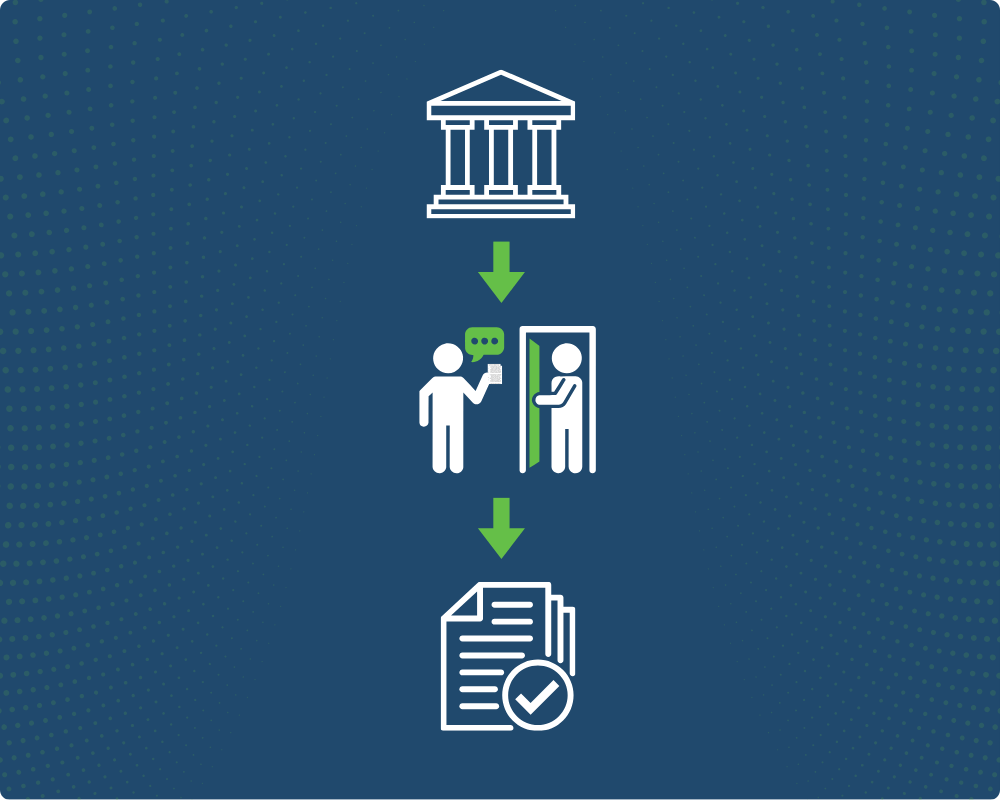
Court issues documents – Courts issue documents such as a summons, petition, or subpoena, which notify an individual or entity to appear in court in connection with a lawsuit's filing or progress.
Papers are served – A registered process server, sheriff, or other qualified adult delivers the issued document, along with case-relevant legal papers, such as a complaint, subpoena, writ, or eviction notice, to the recipient.
Proof of service filed with court – The server signs a declaration confirming when, where, and how service occurred, which is filed with the court.
At ABC Legal, we deliver millions of legal documents each year, giving us unmatched insight into how service of process works across the U.S.
Legal documents must be delivered by someone who is legally authorized to do so. In most states, this means hiring a process server or sheriff. Some jurisdictions allow anyone over 18 who is not involved in the case to serve papers, but courts often prefer or require the reliability of a professional.
Professional process servers, like those at ABC Legal, are trusted for their expertise in meeting each state’s specific requirements.
Experienced process servers understand how to comply with strict rules, complete affidavits properly, and ensure service holds up in court.
People can try to avoid being served, but they can’t stop the legal process from moving forward. If someone refuses to open the door or accept documents, alternative methods, such as substitute service (to a co-resident or employer), service by publication, or other court-approved delivery options, may be used. It is essential to ensure the servee is properly notified of actions against them, even if they avoid or evade notice.
Once a person is served, the server completes a document called a proof of service (also known as a declaration or affidavit of service). This document confirms how and when the legal documents were delivered and is filed with the court to show that proper notification took place.
ABC Legal provides proof of service to customers through their secure online accounts.
If the person refuses service documents or denies their identity, the process server will record the attempt and may try again or escalate the matter through court-approved channels.
See Alabama Service of Process

See Arizona Service of Process
See Arkansas Service of Process

See California Service of Process
See Colorado Service of Process
See Connecticut Service of Process
See Delaware Service of Process
See Florida Service of Process
See Georgia Service of Process

See Illinois Service of Process
See Indiana Service of Process
See Kentucky Service of Process
See Louisiana Service of Process
See Maryland Service of Process
See Massachusetts Service of Process

See Michigan Service of Process

See Minnesota Service of Process
See Mississippi Service of Process
See Missouri Service of Process

See Montana Service of Process

See Nebraska Service of Process

See New Hampshire Service of Process
See New Jersey Service of Process
See New Mexico Service of Process
See New York Service of Process

See North Carolina Service of Process
See North Dakota Service of Process
See Oklahoma Service of Process

See Pennsylvania Service of Process
See South Carolina Service of Process
See Rhode Island Service of Process
See South Dakota Service of Process

See Tennessee Service of Process

See Vermont Service of Process
See Virginia Service of Process
See Washington Service of Process
See West Virginia Service of Process
See Wisconsin Service of Process
See Wyoming Service of Process


Courts require service of process to ensure that all parties in a legal case are properly informed. It’s part of the due process rights guaranteed by the Constitution. Without proper service, a court cannot proceed with legal actions, making this a foundational legal requirement.
Yes, individuals may try to avoid service by lying or concealing their identity. However, skilled process servers know how to handle these situations. ABC Legal Process Servers are backed by an internal team to verify residency with advanced tools like skip tracing. Once residency is confirmed, alternative service methods approved by the court are used. Lying doesn’t stop a case—it just delays it.
If legal documents are not served according to the laws of the court, a judge may dismiss the case or delay court proceedings. Improper service can lead to appeals, wasted legal fees, and extended timelines. Ensuring proper service by utilizing a professional assists your case in moving forward.
A summons is a notice that legal action has been filed and requires the recipient to respond or appear in court. A subpoena compels a person to appear in court or produce documents or evidence, regardless of whether they are a party to the case. Both are common types of legal documents served through service of process.
Serving legal documents is accomplished by delivering court papers to the person or business named in a case according to the rules in their jurisdiction. The most reliable way to do this is by using a professional process server, such as those in ABC Legal’s nationwide network, who ensure documents are delivered correctly, on time, and with valid proof of service for the court.
The time it takes to serve legal documents can vary depending on location, court deadlines, and the recipient’s availability. In some cases, it takes just one attempt. In others, multiple visits over several days are necessary. Most courts also set service deadlines depending on the case type.
Yes. Most courts require that legal documents be served within a specific number of days from the filing date—often 30 to 90 days, depending on the case type and jurisdiction. Missing these deadlines can lead to case dismissal, so it’s important to begin service as soon as possible. It is crucial to get information about your specific case and needs.
Yes. The party initiating service must file a proof of service (also called a declaration or affidavit of service) with the court. This document confirms that the papers were delivered properly and becomes part of the official court record.
Legal documents must be served within deadlines set by state laws and court rules. The exact timing depends on the case type and jurisdiction. ABC Legal helps customers meet these requirements with quick turnaround times and real-time status updates, reducing the risk of delays or missed deadlines.
In most legal cases, serving certain documents is required to officially notify the other party. Courts will expect proof that service was completed according to the rules. ABC Legal handles this process from start to finish, making sure your documents are served correctly so your case can move forward without avoidable setbacks.
Service of process is regulated by state statutes, court rules, and, sometimes, federal guidelines. These rules determine who can serve, how delivery must happen, and when service must be completed. ABC Legal’s experienced process servers follow the specific requirements in every jurisdiction, ensuring your service is both valid and court-compliant.
Sheriffs and private process servers can both deliver legal documents, but there are important differences:
Speed: Sheriffs may take weeks because of heavy caseloads, while private process servers often deliver within days, with rush options.
Cost: Sheriff’s fees are usually lower and fixed by the county. Private servers vary, especially for urgent or hard-to-serve cases.
Availability: Sheriffs serve only within their jurisdiction and during limited hours. Private servers are flexible and may operate statewide or nationwide.
Proof of Service: Sheriffs provide a standard affidavit, while many private servers add GPS or photo evidence for extra assurance.
NV PILB LIC#3022